Capstone SSTDR Research
In simple terms, spread-spectrum time domain reflectometry (SSTDR) is a way to detect changes in the electrical properties of some medium. SSTDR works with any number of antennas. These can be measuring wires, or just some material. Each antenna sends out a unique pseudo-random code, and at the same time measures the strength and time of it’s own signal reflected back (reflectometry), and of all the other antenna pseudo-random codes it gets. These measured values show the changing electrical conductivity over time (time-domain). It’s spread-spectrum because it covers a wide range of frequencies all at once. In my research, we focused mainly on 2-4 GHz.
This technology is currently being used commercially to detect characteristics of wire networks, like faults and splits. Most importantly, it shows where those faults and splits are. To detect a fault, it can be thought of sending a signal down a wire, and then seeing how long it takes to get back. If it’s too earl you know there is a fault. SSTDR handles all of the complicated math and allows for a large amount of imaging at once.
My research was to use this technology to detect leakage in silicone breast implants. My advisor, Dr. Cynthia M. Furse, has multiple groups focusing on detecting breast tumors using SSTDR. The idea is that tumors have different electrical properties than the surrounding tissue, so they should be detectedable. An SSTDR detection device would have the main benefits of being less invasive, more comfortable, less money, and way quicker. It wouldn’t be as accurate as a full mammogram, but it would be a great “first line of defense” to catch issues early.
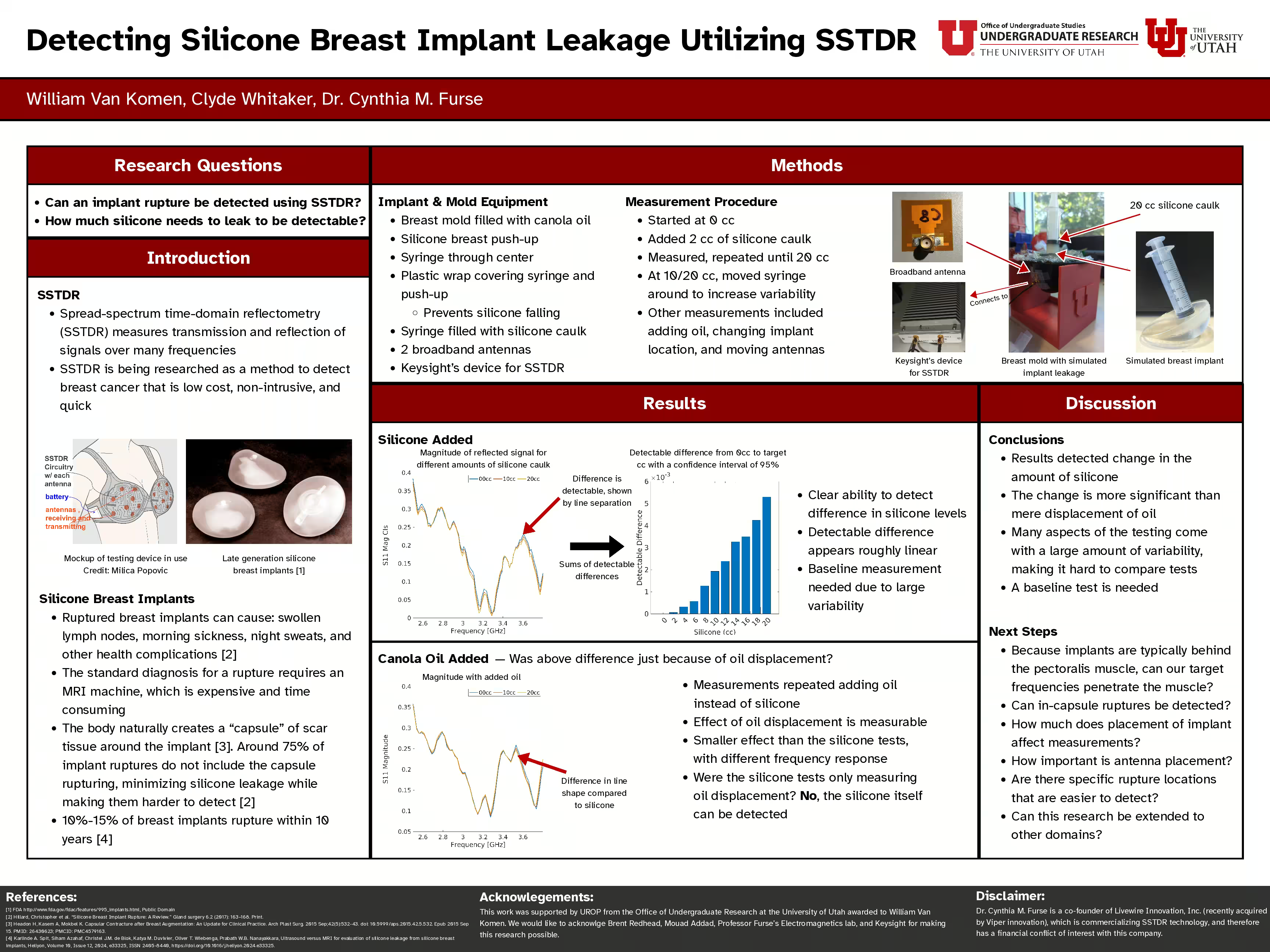
Silicone breast implant leakage was of interest to us since it is very common within people who have breast implants, and it can cause various health issues. (See poster at bottom of page). Compared to breast tumors, silicone breast implant ruptures are easier to predict, meaning trials on real people would be easier and quicker to perform. This testing could help refine the technology until it is finally ready to be used for breast tumor detection.
The main tests my partner and I performed were to fill a breast phantom (a 3D-printed breast) with canola oil, put a silicone breast implant in the phantom, and then inject silicone caulk into it. We used Keysight’s Watson device to perform the SSTDR measurements, and took them for every two cubic centimeters of silicone caulk injected. The materials used aren’t exactly like real-life tissue, but they provide a good baseline to see if this research is worth pursuing more in the future.
After all of the tests we performed, we got really good data that showed that there was a detectable difference compared to no added silicone, to added silicone. This is a great starting point for future research, and hopefully in the future we can see these devices eventually be adopted.